Wednesday, August 24, 2011

Wonderful Weekend Wanders In Wickham


In my last blog entry 'The Ghosts of Post Offices Past' I covered the Post Offices that were situated in and around the former Wickam Municipality. As I was doing my research I performed a walk around the area armed with my compact S1275 Sanyo to track down and photograph the former Post Office sites. As I decided to walk the route, instead of drive, it enable to to get a different perspective of the area and the more I walked, the more I liked what I saw.


Now to be honest the former Wickham Municipality, comprising the towns of Wickham, Islington, Tighes Hill and Maryville are presented as run down urban grunge by the media, reinforcing an unfair stereotype by those Novocastrians who live outside this wonderful urban gem. Once you move past the sterotypes, you'll be astounded by some wonderful late 19th century archtecture,  such as  the wonderfully restored Tighes Hill School of Arts, magnificent civic parks, historic bridges and some wonderful street architecture that reflect Newcastles evolving social history.


The area also boosted some of the richest Aboriginal sites in the Newcastle area, with a well documented  Corroboree site located on the cnr of Church & Hannell Streets (formerly the St James Anglican Church, now Blackwoods), with the last Corroboree performed in 1830 (Wickham PS Centenary 1878 -1978). In addition to the Corroboree site there were many other sites that evidenced Aboriginal life in the area, with reports that fish traps were set in the tidal mangroves & extensive middens along the sandy shores and clear waters of Throsby Creek. Evidence of the middens can be found if you look closely at the concrete pourings on the Grahame Bridge at Lewis Street, you can still see the shell grit that were taken from the ancient middens during the construction!     


With Newcastle expanding with free settlers after the end of the convict era in 1823, more land was sought as the fledgling settlement of Newcastle spread west. When the railway arrived at Honeysuckle Point (Wickham) in 1857, land situated to the north of the railway was an obvious choice as it was flat fertile land, plentiful food from the numerous creeks and freshwater springs (Islington & Smedmore), the area must've seemed like paradise to the early settlers However, with the settlers came the industry and without todays environmental controls, the original beauty of the area was raped in the push for development .


The were slaughterhouses set up (near the present day Marina), a Soap & Candle factory on the site of Wickham PS), coal mines (Caltex & Tighes Hill PS), a tannery (Tighes Hill TAFE), copper smelting (Port Waratah) and unbridled housing development all contributed to the degradation of the once pristine, sandy banks of Throsby and Styx Creeks.


As more people were attracted to this working class area they bought their stories, leaving  their imprint on the suburbs where they lived and then, as their children grew up, they added more stories to the new tapestry that was being woven. One of the fascinating stories is that  in 1885 a young Henry Lawson (18 at the time), came to work at Hudson Bros at Wickham as an apprentice coach painter and spent a lot of evenings and weekends at the the new Wickham School of Arts to continue his studies for matriculation. His time in Newcastle wasn't a happy one due to workplace bullying and perhaps homesickness, so he returned to Sydney after a few months, becoming one of Australia favourite poets . 
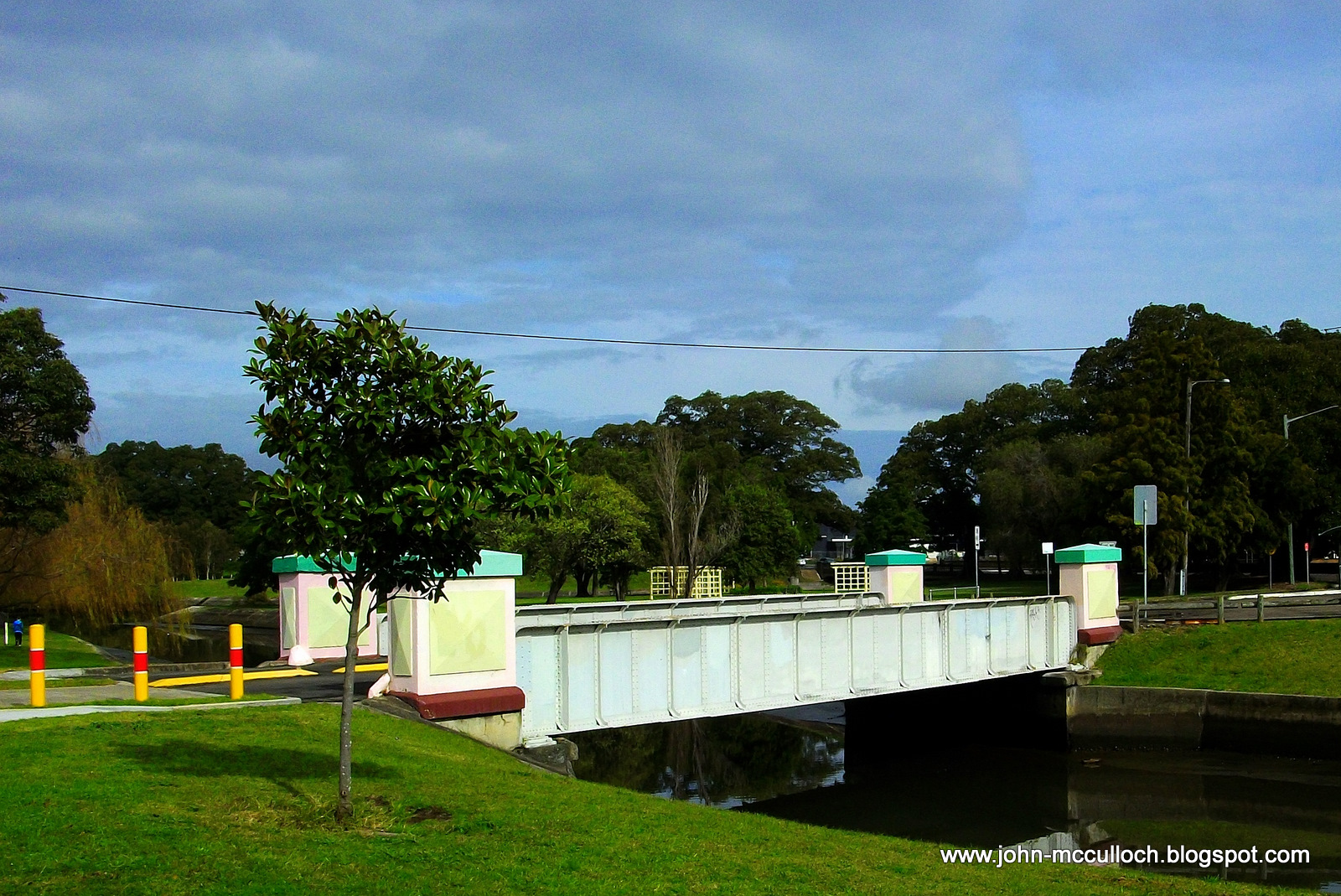

But time moves on and the former Wickham Municipality is slowly recovering from almost a century of unbridled industrial carnage, leaving a landscape that has been changed forever from those heady days in the 1820's when area was known as Whytes Paddock. But with that urbanisation came some beautiful 19th century architecture, expansive parks framed by magnificent fig trees, fascinating streetscapes and stories from people who have generations invested in the area.


Yes the area has it blemishes, that you can't deny, but I'd rather choose to live in an area with a past, than in a suburb without a soul.


.

Tuesday, July 19, 2011

The Ghosts of Post Offices Past - Wickham (2293)


Wickham Post Office- circa 1900 - NLA C4076 
The 27th Febuary 1871 would  have been quite an important day for the proud residents for the small  town of Wickam as on that day they were proclaimed a Municipality, the first in Newcastle. The new Wickham Municipality incorporated the surrounding towns of Maryville, Smedmore (Wickham North), Linwood, Islington and Tighes Hill ... quite a day indeed!


Wickham LPO 
With the industrial expansion of Newcastle in the 1860's more workers were seeking accommodation so residential land  was opened up from Blane Street (Hunter St) to Whytes Paddock on the banks of Throsby Creek with sales commencing in 1868. Due to it's unique siting, with the harbour and railway close by, industries also were also attracted to the area, with a soap and candle factory, abattoirs (Tighes Hill & Wickham), steam sawmill, Hunter River Copper Works (Port Waratah) and the coal mines situated at Bullock Island (Carrington), Tighes Hill (Ferndale Colliery) and the Maryville (located on the current Caltex refinery), all providing a varied working environment for the Wickham Municipality as the area expanded.


The early living conditions were further enhanced by the limitless supply of fresh water from the Islington sand beds, the abundance of fresh fish, eels and estuary prawns that were found in clear waters of Throsby and Styx Creek.


Tighes Hill 1938 - NLA C4076
As more people were attracted to the area the postal needs of the community also grew and one of the first deputations by the newly elected council in 1871 was to ask the Postmaster-General to establish a formal Post Office and so on the 13th September 1872, local store owner Mrs E.Blackie was appointed Wickhams first Postmistress. The Wickham Post Office grew rapidly becoming a Post & Telegraph Office (7/10/1878), a Money Order Office (MOO - 1/1/1880) and a Government Savings Bank agency (GSB -22/5/1884). Then on the 27/8/1892 the new purpose built Post Office on the Cnr Throsby & Hannell St's opened for business. This beautiful two storey building was built in the James Barnet 'country Post Office' Italian Renaissance' style (although it was completed during the time of  James Liberty Vernon tenure as New South Wales Government Architect) and cost £1897 ($1.4 million) to complete. Sadly we only have photo's of this iconic building left as the 1989 Newcastle Earthquake seriously damaged the structural integrity of the building and as a result the building was demolished. Australia Post also decided at this time to convert the Post Office to an LPO (Licenced Post Office) and this happened on the 1st December 1994.Today the current LPO stands on the former site of the Post Office, albeit now combined with a newsagency.
former Tighes Hill PO


It is also interesting to note that Tighes Hill began operations on the 13th September 1872, the same day as the Wickham Post Office with J.Kilgour appointed Postmaster and like Wickham, the Post Office grew as the population expanded. It became a Money Order Office (22/9/1872), Telephone Service (31/1/1890), GSB (15/10/1894) and then eventually became an Official Post Office (3/11/1914). In 1937 the Post Office moved into a new building at 4 Elizabeth St and stayed there until 1997, when Australia Post closed this wonderful example of an Art Deco Post Office for good.
       
Islington PO - 1951 - NLA C4076
Islington Post Office was promised to the residents by the Postmaster-General for many years prior to its opening on the 1st January 1893 with S.Proctor appointed the Postmaster. Again it quickly grew with a Telephone Service (18/11/1899), MOO & GSB (9/6/1900) and then finally a Official Post Office in 1941. A new Post Office was built in 1974 for $101,520 and housed the postmen for the Wickham/Islington area, as the then PMG began to restructure mail delivery. This building was then eventually sold in the 1990's and the delivery operations were moved to new larger premises in Hudson St  Hamilton (now itself closed and the operations haved now moved to Warabrook). The retail side of the Islington Post Office itself was closed and the licence sold off. As a result Islington became a Licenced Post Office, another LPO located within a newsagency and with that, the town lost some of its rich postal history.


1974 Islington PO site
Islington LPO 

The last of the area's Post Offices was the Wickham North Post Office located in Downie Street Maryville. It was called Wickham North because there was already a Maryville in Victoria and the authorities didn't want any confusion! When the name was proposed a few old time locals preferred the name Smedmore to reflect the original name for the area, however the PMG stuck to their guns and it remained known as Wickham North Post Office. This little Non Official Post Office (NONO) first opened in 1951 with J.G. Power appointed licensee and it closed in 1971. It reopened in 1972, however by 1978 it had once again closed, never to reopen, although the street posting box (SPB) remained in place until it too was relocated to Hannell Street.


Downie St Wickham 
So one day if you are walking through the streets of the former Wickham Municipality and you feel the hair on the back of your neck rise up, don't be afraid, it is probably just the ghost of a Post Office past looking for some proper closure.


I'd like the thank the invaluable assistance given to me by the NCC Library, Newcastle Family History & Historical Society, the National Library of Australia & Doreen Cummins of the Honeysuckle News & Post (Wickham LPO) in putting together this blog. 


As a footnote it should be understood the name Wickham is actually a corruption of the original spelling of the town of  Whickham, which is located a few miles from Newcastle upon Tyne in north east England   

Wednesday, June 15, 2011

Sisi Upendo Dubbo


If you lived in one of the many African countries that speak Swahili, "Sisi upendo Dubbo", may just be the phrase that would pass your lips if you came to visit the magical Taronga Western Plains Zoo. The zoo is located a few kilometres outside the New South Wales city of Dubbo and is just over 400 kilometres west of Sydney, on the Central West plains. I have also covered the history of the town and the surrounding area in my blog called  'The Lost Post Offices of  Australia - Dubbo (2830) '  


However, on this visit to this wonderful city I was not admiring the impressive architectural heritage, but I was there with the wife and grand-kids to check out the impressive 300ha open-range zoo.


Now I'm not going to judge on the pro's and con's of whether it is ethical to keep animals in zoo's, however it is quite a privilege to be able to photograph some exotic wild life up close and personal. Also, going to the Taronga Western Plains  Zoo give kids the opportunity to see these wonderful animals outside the confines of their lounge room (via the Nat Geo & Discovery Channels) and where they can learn about the conservation projects that are in place to ensure these beautiful animals are around for generations to come. 


Where is King Julian?


Being tall is not always an asset!
Dinner Time
Meerkats on alert


Looking for love
You look like a tasty treat


I'm the pretty one


The best are always just out of reach


While I would not recommend spending 4 hours travelling confined in a Kia with three children, a visit to the Taronga Western Plains Zoo is a highly rewarding experience for everyone and even if playing 'I Spy' for 400 kilometres may have you contemplating evil, the opportunity to photograph these wonderful animals without bars will make the trip a tad more bearable ... just!     

   
Sisi upendo Dubbo  ..... yes we do love Dubbo!

Thursday, June 2, 2011

The Lost Post Offices of Australia - Teralba (2284)


"This now little township, which has sprung up like a mushroom, has some comfortable miners residences already built in it. Mr. T. Williams, late of Minmi, has just opened a new hotel there, which is situated close to the edge of the lake. He seems to be one of the right sort, and is doing a flourishing trade, as it is the only hotel within several miles. There are two butchers' shops, two stores, and a baker's shop to supply the people's wants, with a good school for the children." - The Maitland Mercury & Hunter River General Advertiser 13th December 1887.


It would seem that our good correspondent from the Maitland Mercury forgot to add that Teralba also had a Post Office, although the Post Office was known as Winding Creek at that time.


original letter/newspaper receiver  
Teralba is a small community situated on the northern edge of Lake Macquarie (about 20 kilometres from Newcastle) and is part of an area of 914 acres that was originally granted to Capt. James St. John Ranclaud in the 1830's. Upon his death in 1842 the title passed to James Mitchell, who combined the Ranclaud land with his existing Lake Macquarie holdings and the area became known as the Awaba Park Estate. Upon his death in 1896, the Mitchell estate was then bequeathed to his daughter, Margaret Quigley, who continued to develop the land for pastoral enterprises. 


In the 1880's the NSW Government decided to extend the railway from Homebush to Newcastle and so it was from this great engineering achievement that the town of Teralba (or Tirelbah, as it was known to the local aborigines) began to rise from the scrub. The site was chosen by the contractors because of the access to a fresh water stream and that they were able to quarry the much needed ballast from a site that was known as 'Big Hill'


Teralba PO - 1920's  (NLA C4076)
As men sought employment on the railway, a town quickly established around the quarry and by 1885 there were over one hundred men employed in the quarry. A lot of these workers were accompanied by their families, living in rudimentary accommodation, mostly tents and dealing with the harsh environment of the Australian bush. It should also be remembered that at the time there were also over 45 children living in the fledgling camp as well ... hard days indeed!    


As the camp expanded the needs of a Post Office were required and so on the 1st January 1885 the Winding Creek Post Office opened, with Mr S.G. Hooper appointed as the first Postmaster. Who Mr Hooper was I can't ascertain, however, as most of the business owners can be identified, Mr Hooper could have been a mine manager at the  Amos & Co. gravel quarry, which was not uncommon in the early days of the Post Office. The mail was initially conveyed from Wallsend to Teralba (Winding Creek) three times per week via horse/coach and was incorporated into the existing Wallsend to Cooranbong mail run.


Street Posting Box circa 1870's
Luckily for the residents of Teralba a viable coal seam was also opened up in 1886, so once the railway reached Teralba in August 1887, the little township continued to thrive. Also coinciding with the arrival of the railway, the postal and telegraph operations were transferred to the railway station on the 1st January 1888 with the Officer in Charge Mr H.F. Nesbitt appointed the new Postmaster, his remuneration for performance both tasks was £150 p.a. ($115,000). The arrival of the railway also provided Teralba with a direct link to Sydney with the mail now arriving daily at 4.30pm without it having to come via Newcastle and Wallsend. The Teralba Post Office continued to grow, becoming a Money Order Office  (3/6/1889) and then a branch of the Government Savings Bank (1/10/1895). 


The growth of the Post Office was forcing more and more people to cross the busy main north railway so calls were made to find a more suitable location for the Post Office. The site that was eventually chosen on the western side of William St (possibly at 61 William St ) and the 'new' £700 ($85,500) non official Post Office was eventually opened on the 12th August 1904 with Miss M. O'Shannessy  appointed Postmistress.


According to the Sydney Morning Herald, on the 4th October 1924 the Postmaster-General called for tenders for the "Removal and re erection of post office building, repairs and painting, and installation of electric light". Who accepted the tender and when the work was actually done is still unclear, however we do know that the Post Office, including of the original building,  were moved from it's William St location to 42 York St in 1924/25. In 1996 Teralba became a Licensed Post Office (LPO) and then the current owners, Llynda & Peter Cleary, finally moved the Post Office from the cramped 100 year old building to combine the Teralba Post Office with their newsagency next door.


So it doesn't matter if it is called Tirelbah, Awaba Park Estate, Fresh Water Creek, Winding Creek, Big Hill, Glen Mitchell, Gravel Pits, Ballast Pit, Billy Goat Hill, Hillsborough, Quigley Estate or even Monkey Town .... the present day Teralba is still being served by Australia Post, as it has been for over 125 years!  


I would like to thank the NCC Library, LMCC Library, Trove Australia, Newcastle Family History Assoc. and Llynda & Peter Cleary for their assistance in compiling this blog.  

Teralba Update -  Teralba no longer has a Post Office. A few weeks ago the newsagency ceased to be an LPO & the licence has been downgraded to a CPA (Community Postal Agency).


P.S. I mentioned in an earlier blog about how I come across some interesting side stories during my research. However, some of those stories are tragic and with the railway running through the middle of town, some of those stories are truly heart wrenching. On the 17th December 1911, one week prior to Christmas, two young girls were killed in a terrible tragedy. Below this is the SMH report from Monday 18/12/1911 -


“A double fatality occurred line near Teralba yesterday, when two little girls were dashed to death by a passing train

At about 3.15 yesterday afternoon Ada Duncan, aged 10 years and 9 months; Clara Duncan, aged 8 years; and Gladys Duncan passed through tho wicket-gates about half a mile north of the Teralba railway station. They were about to cross the rails, when they noticed an empty ballast train travelling from Teralba towards Newcastle. As their attention was directed towards this train, they   failed to notice the Tamworth mail, which was dashing along towards Sydney. When the ballast train had passed, the children attempted to cross, but Ada and Clara were struck by the englne of the Tamworth mail. Ada was dragged about half a dozen yards, and was killed instantaneously. Clara was thrown clear of the rails, but was badly injured. She was brought on to Newcastle, and taken to the Newcastle Hospital, where she died at 17.30 last night.


Gladys appears to have had a narrow escape. The little girl Ada, who was killed instantaneously, was a cousin to the two other girls. Ada had arrived from Dora Creek at about midday, and the three children were taking a walk when the accldent occurred. Clara and Gladys were sisters, and lived with their mother In Victoria Street, Teralba. Their father, Robert Duncan, died recently.

An inquest will be held at the Courthouse, Teralba, at 10 o'clock tomorrow morning"


site of the former wicket gates at Teralba


That makes this tragic accident 100 years old this year and so I plan to give reflection on the 17/12/2011 to the two young lives, Ada and Clara Duncan, who were snatched away well before their time.


Tuesday, May 10, 2011

Sky High


Back in 1975 Australia's first martial arts film, 'The Man From Hong Kong', was released to Australian and International acclaim. In the opening sequence a young spunky (70's speak) Rosalind Spiers hang glides into the Royal Hong Kong Police Training School in pretty spectacular fashion, while the hip tune 'Skyhigh' performed by British Jigsaw (not to be confused with the Australian band Jigsaw, again a 70's thing) provided the soundtrack. Later on in the movie hang gliding sequences were filmed at Stanwell Park on the Australian South Coast and then also used in a spectacular finale for the film. 

So this was probably the first time that this sport was introduced to the Australian public via the mass media.

I was reminded of all this the other week, when having a spare few minutes at work, I drove up to Newcastle's spectacular Strzelecki Scenic Lookout to just take in the wonderful Newcastle coastal vista. While I was there, the guys from Air Sports - Newcastle were preparing  to perform a couple of tandem flights and so I grabbed my trusty go anywhere friend, the Sanyo S1275 camera to capture the fun, colour and excitement of a tandem hang glide. However, I must admit that I hadn't kept the batteries in the camera fully charged and a result I could only take a limited amount of shots on this occasion before the batteries expired. Not very professional at all on my behalf!  

My failing battery issue aside, these flights look spectacular as they leap from the sheer cliff face, over the azure blue ocean and soar up to 3.000ft, taking in what must be one of the most unique sightseeing adventure tours in New South Wales, if not in the whole of Australia. 

Now you may not want to hang glide into a Chinese Police compound and you may not even want to take on an evil Australian drug lord in the Sydney CBD, but if you want to get a different perspective of Newcastle then contact the crew at Air Sports - Newcastle http://www.air-sports.com.au/  and jump into adventure.


Also make sure you always take your camera on your travels and make sure the batteries are always fully charged!  
     

Monday, April 25, 2011

Living the steam dream


The first signs are quite evident in the cool autumn morning, it starts with the unmistakable sound of 'choof, choof, choof', then in the distance the first clouds of steam and smoke gather over the Main Northern Line, which can only mean one thing .... the Hunter Valley Steamfest is upon us once again.


Sooty
Although not generally known, the Hunter Valley region was virtually built on the ribbons of steel, which finally reached Maitland in 1880 (or West Maitland as it was known until 1949). This enabled local produce to be taken directly to the important Sydney markets without having to rely on the vagaries of river transport and the cost associated with the multiple handling of goods. For over 100 years steam trains were a familiar sight on the tracks around the Hunter Valley, with the last steam engine ceasing operations on the South Maitland Railway (SMR) in 1983, which makes the SMR the 2nd last railway to use steam haulage in Australia.


36 Class locomotive
The Hunter Valley Steamfest just isn't about trains, a significant focus is also on the various steam engines that played a huge part economic development of the area. The bigger traction engine were used extensively in the farming, forestry and road construction industries, but also there were multiple uses for smaller steam engines to power generators, water pumps, shearing rigs and almost anything else that required a stable power source.


So this year I decided that I would attend this wonderful Hunter Valley festival for the first time and so arming myself with Canon 400D, I headed off to Warabrook railway to catch the local train to Maitland. Now the Steamfest is unique in that steam trains operate continually throughout the weekend and so even as I waited for my local train, one of the historic steam trains passed through, the beautifully restored 1902 built C-32 class 'Hunter'  No. 3265 locomotive. The 3265 still holds a special place in the hearts of Hunter train buffs, as it is last of the 32 class locomotives still operational and still carries the Hunter nameplate.


Once at the rally grounds there were so many excellent examples of steam propulsion it is nearly impossible to know where to begin to describe the displays. However, what I'll do is give a very short overview of just some of the examples of a technology that once dominated the landscape of 20th century Australia.


McLaren No . 1170
The J & H. McLaren No.1170 - This Traction Engine or 'road locomotive' as they were commonly known), is a great example of the type of equipment that would have been found working around the Hunter region around the start of the 1900's. Typically they were single cylinder of around 7 - 8 horse power capacity and would have been in great demand around harvest and  shearing time.


Christina
Christina - Unlike the McLaren, this John Fowler & Sons model, plate No. 16770 appears to had a life in the road construction industry as a road roller. Although very similar to the J & H. McLaren Traction Engine models the road rollers had a wider front track and  smooth rear wheels for compacting the road surface. Both factories were located in the English town of Leeds and the two competing factories even shared a common boundary. At the height of their manufacturing heyday the John Fowler Steam Plough Works occupied a 15 acre site and employed over 2,500 workers.


Sooty - Another John Fowler & Sons road locomotive, built in Traction Engine configuration, plate designation No. 16605 . 


Aveling & Porter Type D
The Aveling & Porter Type D Road Roller - This is great example of the road rollers that were imported into Australia in their 1,000's during the 1920's as road construction became a priority as more and more vehicles began using the roads after World War One and demand was high for better construction techniques. A lot of these 8 ton, 6 horse power road rollers were imported by Noyce Brothers in Sydney and were sent throughout the state. The cost of one of these machines was apparently around £1321, or around $360,000 today! 


Hazel
Hazel - This is a very rare example of a Traction Engine built by Wm. Allchin of Northhampton in England. The Allchin plant was very small when compared to others of the period and they only produced around 220 machines by the time they stopped building in 1925. Out of the 220 machines produced today it is believed that there are only 20 left in existence and of these 17 are in England, with three believed to be in Australia ... Hazel being one of them.


Marshall Traction Engine
1905 6 horse power Marshall, Sons & Co Traction Engine - Marshall, Sons & Co, located in Gainsborough, England   was one of Englands largest agricultural machinery manufacturer and were one of the early adopters of the internal combustion engines for tractors, which ironically sounded the death knell for steam operated tractors.


1920's Super Sentinel
1920's Super Sentinel Steam Waggon -  At least 100 Sentinel Steam Waggons were imported into Australia between 1921 to 1927 from the Shrewsbury factory in England and there is believed to be only 15 examples of these unique vehicles still surviving today. These odd looking trucks found a niche in our early motoring history, being able to haul over 6 tons and had an achievable top speed of around 20kph from their two cylinder engines, making them more powerful than the horse drawn drays of the time. However, by the 1930's they had all but disappeared off our roads as the petrol engine began to be more readily available to the transport industry. The slow, cumbersome Sentinels were no match for the newer technology and 'choof, choofed' into automotive history.


Vernier Tractor
While it is nostalgic to look back on the age of steam as representative of a gentler era, it must be remembered that this form of propulsion was dirty, high maintenance and very inefficient. An example of this were the early steam wagons that used around 200 kilos of coke, 150 litres of water and had an operational time of around 3 hours which made them very energy inefficient. Also, the steam trains were filthy, smelly and had a bad habit of setting fire to the Australian bush from their embers.


So well it may have been a bit of fun to have a tactile engagement with the past, but I think the age of steam has past and is best left to the industrial romantics. 


Monday, March 28, 2011

A walk to Whibay Gamba

view to Nobbys Beach & Fort Scratchley
On the 10th May 1770 Captain James Cook whilst sailing up the east coast of Australia on his journey of discovery, sailed close enough to the coast to notice, what he described in his journal as, "A small clump of an island lying close to shore...". It was in fact Nobbys Head, the former island that marks the entrance to what we know today as Newcastle harbour and provides Newcastle with an iconic natural landmark.


Now the history of this little island goes way back further than James Cook and was also part of the local Aboriginal Dreamtime stories, with the island which they named Whibay Gamba. The local Aborigines, the Awabakal tribe, tell the story of how  a kangaroo was chased from the mainland by the Wallaby clan after disobeying their laws and under the cover of a heavy fog, swam to Whibay Gamba to hide under the rocky outcrop. The Wallaby clan believed that the mischievous kangaroo had drowned, however, he survived his ordeal and is still hiding there to this very day, hiding under the island. Apparently the kangaroo lets us know that he is still there by thumping his tail, which causes the occasional earthquake around the Hunter region. 


The island itself has changed since the time of Captain Cook with the island now being less than half of its original  height, now standing at 27.2 metres. Although there is now evidence from the Coal River Working Group that the island wasn't as tall as the officially accepted height of 62 metres and was more like 43 metres, which is about the height of the current signal station. What we do know is that changes began to take place as far back as 1818 when Governor Macquarie started work on a pier to link the island with the mainland with convicts using rock from the island to construct the breakwall. Then again in the early 1850's  the height was reduced  another 10 metres to assist navigation, as the island took the wind out of the sails of the sailing ships entering the harbour and then to aid the construction of the lighthouse (completed in 1858) another 2 metres were taken off the top of the island. 


the 1858 lighthouse 
Now due to the isolation of Nobbys and especially since the erection of the Signal Station and Lighthouse, public access to the site has been very limited, however a change in the use of the former island is allowing public to enter the site through a series of limited open days.


I was lucky enough to join many other Novocastrians on one of those days and walked up to the site that offers a different perspective on our wonderful city. The day was another perfect Newcastle day, fine, sunny and with a nor' easterly keeping the edge off the heat. Also taking advantage of the carnival atmosphere were the anti coal protest group Rising Tide, who decided to form a  mini blockade of the harbour in their canoes and other energy efficient water-craft to make their point known. Newcastle Ports, which knew of the protest, just rescheduled the port operations for that day and so no coal loading was hindered that day. While I don't agree with all the aims of Rising Tide, I do appreciate that they give the community a conscience, that there may be another way to live our modern lives and to me, that isn't a bad thing.


So next time Nobbys is open to the public, make sure you grab your best walking shoes, some water to keep hydrated and of course your camera to make the one of Newcastle's most unique photographic locations.


I just hope that the kangaroo who is still hidden beneath Nobbys doesn't get to upset with all the activity above his rock home and start thumping his tail!