Showing posts with label Newcastle. Show all posts

Wednesday, October 3, 2012

Footy Daze 2012


I still cant believe that 2012 rugby league season has been run and won! It doesn't seem all that long ago I was at the first National Rugby League (NRL) match of the season, played at the Hunter Stadium on Thursday 1st March to see the Newcastle Knights lose in a Golden Point shoot out to the St George Illawarra Dragons. 

So it looks as though my weekends will once again seem hollow without watching 'The Greatest Game of All' every weekend and my summer days will be spent counting down the days towards the first trial matches in February.

So lets take a quick recap on my 'season on the sidelines';

10 x Newcastle Knights NRL home matches. I missed only two home game this year, the Round 8 win against the Penrith Panthers and the Round 10 loss to the North Queensland Cowboys. The low point on the Knights season came with the Round 12 loss to the Gold Coast Titans (14 -24) and the high point was the Round 19 win against the Manly Sea Eagles (32 - 6). Overall the season was a bummer with the Knights only winning 10 from 24 matches and finishing a disappointing 12th on the ladder.

3 x Newcastle Knights NSW Cup home matches. The NSW Cup is the official Reserve Grade fixture for the NRL. The Knights won all three of the matches I attended, the wins were against the Auckland Vulcans, the Windsor Wolves and the Canterbury Bulldogs. All these matches were played at Townson Oval Merewether, which would have to be one of the coldest places in Australia to watch rugby league .... brrrr!

1 x Finals Week Two match. My son and I went down to ANZ Stadium at Homebush to watch the Canberra Raiders lose to the South Sydney Rabbitohs 38 - 16. Although I do live in Newcastle and I have season tickets to the Knights, my heart is still with the Raiders who I have supported since 1983.

1 x Newcastle Rugby League Grand Final. I had a great day watching the West Newcastle Rosellas have a gutsy win against the Cessnock Goannas at Newcastle's No.1 Sportsground. I was only going for the Rosellas because their club, situated at New Lambton, has a great bistro and puts on great entertainment. Mum is a Cessnock girl so I should have gone for the Goannas, however the club at Wests is closer!


Some other highlights of the season were taking my 6 year old grand-daughter to her first rugby league game, the NSW Cup match between the Knights and the Vulcans and also taking my father to the same match. So including my son as well, who also attended, we had four generations attending the same match! Another highlight, was also sitting in the same seats all season at Hunter Stadium, freezing our bums off, catching up with Footy Bob and his family, living out the sporting highs and lows in a tribal atmosphere, with either my son or my wife at my side.

All in all it was a great year.

To me the game I follow is not about wins or losses (however I do prefer the wins), it's about getting out in the community, bonding with strangers who support the same team and building great memories to look back on in years to come.

And I hope in the years to come my grand-daughter still remembers me taking her to a freezing footy ground to watch her first match of rugby league .... and that is better than any Grand Final win!             

Oh and by the way, when going to the footy, always take your camera, even a 'point & shoot' can capture the excitement of the day!

Saturday, July 7, 2012

The Perfect Stillness


"It was about eight minutes to six when the balloon quitted her moorings, and in twenty minutes she had become a mere speck, a homeopathic globule in the far distance, serenely and steadily sailing onwards, as though native to and rejoicing in the buoyant element." - Melbourne Argus 2nd February 1858 
The above newspaper report describes the first manned balloon flight in Australia which occurred in Melbourne the previous day, 1st February 1858. The new fangled flying machine was piloted by Mr Joseph Dean in a gas-powered balloon 'Australasian', imported and own by Mr George Coppin. The balloon which rose to a height of 3,000ft (915 metres) and lasted for about half an hour, landed safely on Heidelberg Road was watched by thousands of spectators crammed around Cremorne Gardens.
This was such an important event in Melbourne society that even a special medal was struck to commemorate this outstanding achievement.
Even though ballooning has now been occurring in Australia for over 150 years, when you come across these beautiful machines ,it can still be as awe inspiring to the casual observer as it was to the crowds that lined Cremorne Gardens to watch Aeronaut Joseph Dean make his first Australian flight. and secure his place in history. 
And so it was for me.
I was working in the Hunter Valley near Branxton the other morning when I noticed in the distance that a hot air balloon was operating over the Lovedale vineyards and while I thought it look spectacular rising above the early morning mist I never gave it much more thought. As I drove out of Greta, I noticed that the balloon was closer than I anticipated and as I continued to drive the balloon began to descend rather rapidly. I couldn't pass up such an opportunity, so I pulled safely off the highway and took out my go everywhere camera, the trusty Sanyo S1275. Luckily the position I selected to stop also coincided with the flight path of the fast descending aircraft and I as soon as I was able to get the camera out of the bag the balloon crossed directly overhead and landed safely in a nearby paddock..
Once again the little portable 'point & shoot' Sanyo digital camera proved its worth and I was able to capture the image of a hot air balloon in very close proximity. 
I have often thought about going up in a balloon, so my next task is to actually book a flight on one of the worlds most endearing aircraft and experience ballooning over some of Australia's most picturesque landscapes, the Hunter Valley. If you want to give ballooning a try, I'm sure locally based Balloon Safaris will be more than happy to scratch that itch, you can find more info at http://www.balloonsafaris.com.au/


I'd like to thank the online resources at National Library of Australia, Museum Victoria and Balloon Safaris for providing the unique photographic opportunity
       

Friday, June 22, 2012

The Low Blow


When storms are approaching, most sensible people take cover, however, some less stable individuals grab their camera's and head out into the maelstrom.

Living in Newcastle we are fairly lucky with the weather,  we have a fairly temperate climate with hot summers and mild winters, all in all it is a pretty nice place to live, no cyclones, no hurricanes, no tornadoes, no ice storms, we don't even get snow!


This isn't to say that Newcastle isn't totally immune from extreme weather events and recently  we had our brush with our most unpredictable climatic visitor ... the East Coast Low (ECL). Now ECL's seem to feature on the Australian east coast around the start winter when warmer waters in the Tasman Sea (prior to this years event the sea surface temperature was around 21°) form eddy's off the coast and mix with a cold front moving through southern Australia. Although an ECL can form any time of the year, in my opinion, they seem to occur between April and late June.(more info on ECL's  can be found at the Australian Bureau of Meteorology )  


Our latest ECL occurred on the 5 - 6 June, when a low deepened off Victoria and then moved up Australian east coast bringing with it 7 mtr swell, wind speeds of 94 kp/h and 20 mm of rain. In terms of severity this storm was only a minor weather event and quickly blew itself out over two days. Which kind of makes  this latest ECL a baby when compared to the 2007 'Pasha' Storm, where Newcastle had a 14 mtr swell, wind speeds of 124 kp/h, over 200 mm of rain and caused the grounding of the 76,000 tonne bulk carrier the Pasha Bulker, or the 1974 'Sygna' Storm which had wind speeds of 165kp/h recorded at Nobbys Head! 


Since I was holidays, I like a lot of other hardy fools, braved the howling wind and driving rain to head down to Newcastle to capture what was unfolding along the coastline.


Although the conditions were nowhere near the intensity of the '07 'Pasha' storm, the conditions were spectacular, especially around the southern breakwall to Newcastle Harbour, where waves continually pounded over the walkway, quite a sight. Another rare event that was occurring  were surfers were taking advantage of perfect sets that were entering the harbour on the lee side of the breakwall and were making the most of this unique opportunity! Unfortunately  even getting as close as you could to the pounding surf the camera could not capture the awesome beauty of 7 metre white crested waves that were being continually pushed up the coastline by the intense low pressure system.


So next time you are on the Australian east coast and you hear about an East Coast Low forming in the Tasman Sea, grab the camera, clear the memory card, charge the batteries, prepare the wet weather gear and head out Although you will be cold and wet, to get this close to nature at its unpredictable fury, is truly an unforgettable event.  


A word of warning though, if you are silly enough to venture out in these conditions be very mindful of the extremely hazardous conditions that you are exposed to, especially near the coast       

Wednesday, April 11, 2012

Muscle & Muscle


On a day when religious people observe the Resurrection of Jesus Christ and chocoholics are indulging in their annual chocolate orgy, some of us in Newcastle celebrate Easter Sunday in a display of pure grunt and muscle power.


Not just any muscle, but with the toughest of them all ... the Ford Mustang, a car that celebrates big block normally aspirated  V8 engines, wide rubber, tons of chrome, 4 speed 'top loader' manual transmissions and a car the fuelled the dreams of every boy growing up in the 60's and 70's.


Newcastle was lucky enough to host the 2012 Mustang National over the Easter, with over 300 of these iconic American muscle cars from the Mustang Owners Club Association of NSW on display, including a 1982 SSP Mustang, a Mustang Ute and every kind of Mustang in between.


Out of all the Mustangs on display my favourites were the beautiful 1969 Shelby 350 GT, the last of  iconic Carroll Shelby produced Mustangs and the awesome 'Big Red', a 1967 Shelby GT 500 with the massive 428ci (7 Litre) engine to make this beast the mother of all Mustangs!    

But there was not just motoring muscle on display in Newcastle on Easter Sunday ... playing at the nearby Ausgrid Stadium was the Round 6 clash of the National Rugby League competition, where human muscle was on display. The local team, the Newcastle Knights were playing the Parramatta Eels in a dour struggle. After 80mins of hard slog in warm autumn sunshine the Newcastle Knights were eventually victorious 14 - 6 and kept themselves in the hunt for the finals come September. 


So even if you can't play Rugby League, or don't own a Mustang, you can still come to Newcastle and pursue some other leisurely such as whale watching, wine tasting or just soaking up the sun on some of  Australia's best beaches .... beats sitting at home sucking eggs!  
  

Tuesday, March 27, 2012

Sharing Weekends


After our dismal summer, it has been great to actually get out and about, doing things that make the week at work bearable.


What is even better when you get to share those moments with people you love.


Saturday dawned to a fine and warm early autumn day, not scorching hot, but still warm enough to visit Nobbys Beach. It was made even better because my grand-daughter was visiting and so we headed down to make the most of the last of the sun, surf and sand. The temperature was still around 25 deg. and the water temperature was still around the low 20's, which made a late, late season swim quite pleasant experience ..... something I missed out on during our summer of sorrows.


Sunday was also a copy of Saturday, fine and mild. So it was off to a community planting day, organised by the local council to help stabilise a local creek that has recently been reclaimed from invasive non native plants. So for two hours, we dug, planted, mulched and watered new plants to help our local environment and our local community.


After our free breakfast, it was then off to Kurri Kurri and to wander around the 9th Annual Nostalgia Festival. Rock 'n' Roll music, classic cars, Rock 'n' Roll music, hot rods, Rock 'n' Roll music, market stalls, Rock 'n' Roll music ... all combined to make the day a wonderful adventure, a real step back in time to the 50's and 60's era ... oh and did I mention the Rock 'n' Roll music?


Sometimes it is great to get some 'me' time on the weekends, however it is better when you can share your weekends with family, community .... and Rock 'n' Roll music.   


Thursday, February 16, 2012

When A Town Divides


One of the most devestating things that can happen to a community is when it tears itself apart over a trivial issue and then for that issue to create a longer term community divide.


Such an issue has polarised my town of Newcastle over of all things, trees! Yep, the 14 Laman Street fig trees have driven a political wedge into the community, with the Save Our Figs (Greens/Social Alliance) on one side and the Newcastle City Council on the other.


Now trees are important to any community and they should be highly valued, however, as with anything, they should be closely assessed for suitability to the urban environment, The local city council assessed the Laman Street trees and for better or worse they concluded that the time had come for their replacement. The trees were around 80 years old, their invasive root system was severely compromising the underground utilities, also, the same  root system had severely damaged the road pavement and the figs themselves had not just the nasty habit of unpredictable branch failure, but also of total tree collapse (as evidenced during the 2007 'Pasha' storm). The detritus of the fig trees also clogged drains, created numerous slip/trip hazards and with the bird and bat (flying fox) excrement in abundance it made a visit to the Newcastle cultural precinct a decidedly unpleasant event. However, for all their faults they really did look wonderful, their enormous canopy provide wedding photographers with a wonderful backdrop and the dappled shade provided nearly the perfect lighting for capturing the happy couples wedding day. A lot of local Novacastrians grew up with the trees and so the figs formed quite an emotional bond with a lot of older residents, so It seemed that those who thought they held the most memories also believed that they held the final say in any decision on the future of the trees. The Laman Street fig tree's had become very important touchstones to peoples memories of a bygone age in Newcastle.


So it wasn't surprising that when the local council decided that the time was nigh for the figs, that the shit most certainly was going to hit the fan and it would cause deep divisions within the city as both sides settled in for a long, protracted fight. The big difference in this fight, as opposed to other fights with the council over development issues in the past, is that this time the local council wasn't dominated by the old ALP (Australian Labor Party) or a loose collection of left wing misfits, but had a majority of councillors that were of an independent and or, of a right wing persuasion (or for want of a better description, 'no crap' politicians).So when the decision was made to remove the figs and the vote taken, from that day there was no turning back.


So at 5.45am on the 31st January the chainsaw moved in and the trees came down, with the 14 figs felled to the stump and mulched to woodchip by Tuesday 7th February.


Personally I was for the removal as I saw that Laman Street had become a dirty rut riddled rat run that was not showcasing the cities unique architecture as I believed it should be presented to visitors. I, and a lot of other ratepayers, saw the redevelopment of the cultural precinct as a vital  step in the cities revitalisation as a visitor destination (Newcastle is currently ranked by the Lonely Planet guide in the Top 10 of must visit destinations) and now the trees now removed the Art Gallery, Library and the Baptist Tabernacle are able project their differing architectural styles to the world, instead of being hidden by the fig trees. 


Unlike a lot of  opinions, my favourite building is the War Memorial Cultural Centre (opened in 1957) it now dominates the landscape above Civic Park and now free of the fig trees it is reinstated as one of Newcastle's most important buildings of the last century. One thing I never noticed with the building is the unique colouring of the sandstone, when I first viewed the building without the foliage the sandstone looked almost  like pink paint primer and it is not until I got close that I actually noticed that it is in fact the hue of the sandstone that gives the building a unique look.   


The building on western side of the Cultural Centre is the Baptist Tabernacle which was opened in 1889 and it was designed by the renowned architect Frederick Menkens  (1855 - 1910). Menkens designed the Laman St facade in a neo-classical Corinthinan style that reflected the Classical Revivalist style that was coming in vogue during the late 19th century. It should be noted that apart for the very ornate Laman Street frontage, the rest of the building is designed in a very utilitarian manner to save on costs ... gotta love those very sensible Baptists! With the foliage removed from the from the front of this wonderful building all of Newcastle can see what a wonderful piece of architectural heritage has been retained.


The Baptist Tabernacle is in direct contrast to the Newcastle Regional Art Gallery which is located on the eastern side of the Cultural Centre and is an example of modernist architecture in the Brutalist Architecture style that came in vogue during the late 1970's, the Newcastle City Administration Centre is also another example of this type of angular geometric style. The Newcastle Regional Gallery which was formerly opened by Queen Elizabeth II on the 11th March 1977 is earmarked for redevelopment and expansion along with the changes earmarked for Laman Street refurbishment.   


But no matter what the end outcome of the redevelopment is, the psyche of Newcastle community has been changed and it will take a lot of time before the healing process can begin. Perhaps as a community we can take solace from the Lyndon Dadswell bronze sculpture in the foyer of the Cultural Centre which represents "youth emerging from the conflict of war and looking with hope and courage to the future"
        

Friday, January 27, 2012

What Happened To Summer?


What happened to summer?

When I was a kid growing up in one of the sprawling suburbs on Australia's east coast, our summer started for us kids on the Labor Day Long Weekend which is celebrated on the first weekend in October and from that weekend on it was Stubbies (a popular kind of shorts), thongs (double pluggers), surf, sand, sunburn, Beach Boys tunes and girls. This Australian rite of  passage  usually continued right up until Easter Long Weekend. Yes, those were the lazy halcyon days of my youth.

What happened to summer?


Last year we had a late start to summer with the warmer weather not really kicking in till the week before Christmas and playing out until late April. Once again this year we have had a late to our summer, with the warmer weather waiting until New Years to bless us. Even then it has been a patchy start to 2012, with a few hot days in between the dominant  southerly air stream, that have bought patchy showers and cooler temperatures. To emphasise the point, December 2011 was the coldest recorded in 50 years with an average mean temperature of just 19.9º and with only an average 6.7 hours per day, down from the usual  7.9 hours, which added to the gloom.  

What happened to summer?


But it is not all doom and gloom, I don't think I have ever seen my garden looking so lush and verdant at this time of year ... ever! Usually by January the gardens are really struggling, as the moisture evaporates with hand watering and heavy mulching the only way that the avid gardener can keep his garden from desiccating before their eyes. However, not this summer, the whole garden is alve with new growth, especicially the  frangipanis which are producing flowers en masse, the like I have never seen before.


What happened to summer?


Although my garden is in picture perfect condition, a wet summer has its drawbacks as well, like the vines in the Pokolbin vineyards area not setting the fruit, which could lead to a smaller crop and a poorer vintage this season. Another drawback  is the lack of beach days, where I get to spend lazy days reading good books and soaking up the sun on some of Australia best suburban beaches and worrying about how to keep my camera free of sand. But not this summer, beach days have been a rare event and movies have been the preferred weekend outing.  


What happened to summer?


So what happened to summer, I don't know, perhaps next year we'll get one .... and then we can complain about the drought, bushfires, water restrictions and a brown lawn.


Wednesday, November 16, 2011

The Lost Post Offices of Australia - Stockton (2295)


In 1800 a gang of 15 convicts, escaping from Broken Bay in NSW, stole the colonial sloop 'Norfolk' and ran aground at the present day Stockton, thus giving the area it's first and more romantic name, Pirate Point. 


Situated less than 1 kilometre across the harbour from Newcastle, Stockton has its own unique history, which dates back to early Aboriginal occupation and was known as  "Burrinbingon" by the local Worrimi tribe. Stockton was known by the aboriginal as a gathering place of plenty as it was well stocked with oysters, pippies and plenty of fish species in the river. When Lt Shortland 'discovered' Newcastle in 1797 word got back to Sydney about the natural riches that could be found, especially the coal and cedar and it didn't take long before 18th century entrepreneurs came to take advantage to the abundant riches. One of the first  businessmen was Hugh Meehan, who in 1799 began operating a saw pit on Stockton's northern shore      


Following the establishment of the convict settlement at Coal River (Newcastle) in 1804, Stockton then became a horrendous place of punishment as convicts were sent over the river to work the lime kilns that were situated close to the former aboriginal middens that were scattered around the area.   


By 1823 the convict era had finished and so private settlements along the length of the Hunter River flourished, including Stockton. Large grants of land were issued in the 1830's and early industries quickly flourished, salt works and foundry in 1838, vitriol (sulphuric acid) works in 1853, tin smelter in 1872 and the colony's biggest textile factory (which burnt down in 1851). however the mainstay was shipbuilding, with at least six shipbuilders operating in the area by the 1860's.


With a population of over 150 permanent residents the first calls were made for the establishment of a Post Office on the peninsular in 1859, however the NSW government declined, mainly due to the high cost submitted by the contractors to convey the mail across the harbour, one tender was quoted as £60 ($10,000), which was considered to high of a cost at the time.


Not to be deterred, in November 1861 representations were once again put to the government, this time by local politician Mr James Hannell and in this instance they were successful. On the 1st February 1862, Mr Samuel Sterling became the first Postmaster of the new Stockton Post Office. A contract was also let to Mr Henry Plenglaze for £36.13.5 ($6,000) to provide a 6 day mail service from Newcastle to Stockton. According to the Parish Maps the first Post Offices seemed to be located off Fullerton Road, near what is now known as Punt St (formerly known as Factory St.). Several Postmasters followed Mr Sterling ... William Adams (1868), Edward Miner (1870) and then in 1873 the former contractor, Henry Penglaze, who held the position until his death in 1882,  then passing the running of the Post Office licence to his wife, Elizabeth.


As Stockton continued to grow, especially when the Stockton Coal Company commenced operation in 1882, so did the demands for better postal services, including the connection to the telegraph. Following an assessment by Postal Inspector Davies in 1886, it was decided to erect an 18 mile  telegraph line from Raymond Terrace to Stockton and amalgamate the Post Office and the Telegraph Office.


In 1887, Stockton at last had an official Post & Telegraph Office with Mr John Beckett appointed to the position with a salary of £124 p.a. ($130,000). On the day he opened Stockton's the new Post & Telegraph, the 27th June 1887, his first message as the official Post & Telegraph master was "I have opened the office here this morning, may I take on a Probationer to carry messages, no other person employed here but myself ", Postmaster Beckett was quick to realise the short comings of being the only employee at the Post Office! Not only was his plea for additional staff agreed to but he also gained a part time Postman as well, John Griffiths, who commenced his rounds on 1st September 1887, thus earning the distinction of being the first postman in Stockton .


In 1890 the Post Office also gained a lamp for the front of the Post Office and as this had to be lit and maintained by Postmaster Beckett, so he asked for and was granted an additional allowance of £4 p.a. ($670) to perform this task. Just another perk of the job that we have seemed to have lost over the years!  


By 1891 however calls were made by the Stockton Municipal Council for a public building be erected for a Post Office, instead of operating out of Mr Bruce's rented premises, so after much negotiating a site on Hunter Street was selected and on the 18th February 1901 at a cost of £1,219 ($815,000) , Stockton finally had a new purpose built Post Office to be proud of.


Over time technology moves on and the Post Office building in Hunter Street had outlived it's useful life which required extensive renovations just to make it habitable. So in the late 1930's it was decided to build a newer office in Clyde St (cnr Douglass St) and update the delivery and retail service. It was with little fanfare on the 6th December 1941 that the new £2,500 ($490,000) modernised Stockton Post Office opened for business. The old Hunter Street Post Office was then sold off and converted into residential flats, eventually the building was demolished and became part of the revamped Stockton foreshore. 


By the late 1990's, the Post Office structure was once again under review and as a result the retail business became an LPO (Licensed Post Office) and is now located in the newsagency at 29 Mitchell St. The old 1941 Post Office building was retained for a few more years before it  too was also sold off and in June 2001, the remaining postal staff and contractors were moved out to Heatherbrae, near Raymond Terrace. 


Next year marks the sesquicentennial (1862 - 2012) of Post Office operations in Stockton, a Post Office that has had quite the history of being moved, updated, downsized, revamped and hopefully, will continue to serve this local community well into the future.


As for the 15 pirates from the Norfolk? Eleven of them stole another boat, but eventually all were recaptured and two of the ringleaders executed ... perhaps they just should have opened a Post Office! 


N.B. I'd like to thank the staff at the Newcastle Library, the National Archives of Australia, The National Library of Australia & the residents of Stockton for their help in compiling this blog.

Wednesday, August 24, 2011

Wonderful Weekend Wanders In Wickham


In my last blog entry 'The Ghosts of Post Offices Past' I covered the Post Offices that were situated in and around the former Wickam Municipality. As I was doing my research I performed a walk around the area armed with my compact S1275 Sanyo to track down and photograph the former Post Office sites. As I decided to walk the route, instead of drive, it enable to to get a different perspective of the area and the more I walked, the more I liked what I saw.


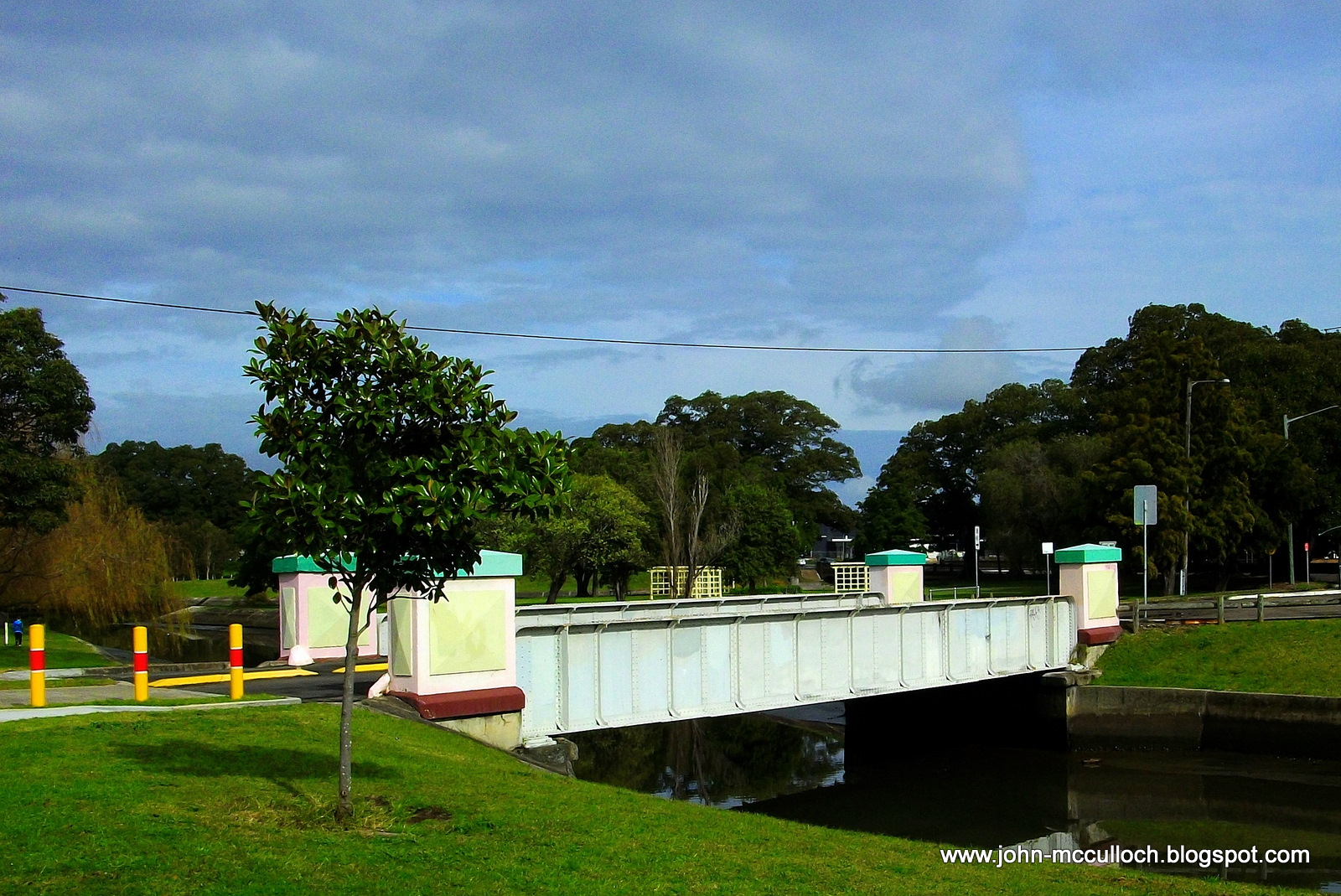
Now to be honest the former Wickham Municipality, comprising the towns of Wickham, Islington, Tighes Hill and Maryville are presented as run down urban grunge by the media, reinforcing an unfair stereotype by those Novocastrians who live outside this wonderful urban gem. Once you move past the sterotypes, you'll be astounded by some wonderful late 19th century archtecture,  such as  the wonderfully restored Tighes Hill School of Arts, magnificent civic parks, historic bridges and some wonderful street architecture that reflect Newcastles evolving social history.


The area also boosted some of the richest Aboriginal sites in the Newcastle area, with a well documented  Corroboree site located on the cnr of Church & Hannell Streets (formerly the St James Anglican Church, now Blackwoods), with the last Corroboree performed in 1830 (Wickham PS Centenary 1878 -1978). In addition to the Corroboree site there were many other sites that evidenced Aboriginal life in the area, with reports that fish traps were set in the tidal mangroves & extensive middens along the sandy shores and clear waters of Throsby Creek. Evidence of the middens can be found if you look closely at the concrete pourings on the Grahame Bridge at Lewis Street, you can still see the shell grit that were taken from the ancient middens during the construction!     


With Newcastle expanding with free settlers after the end of the convict era in 1823, more land was sought as the fledgling settlement of Newcastle spread west. When the railway arrived at Honeysuckle Point (Wickham) in 1857, land situated to the north of the railway was an obvious choice as it was flat fertile land, plentiful food from the numerous creeks and freshwater springs (Islington & Smedmore), the area must've seemed like paradise to the early settlers However, with the settlers came the industry and without todays environmental controls, the original beauty of the area was raped in the push for development .


The were slaughterhouses set up (near the present day Marina), a Soap & Candle factory on the site of Wickham PS), coal mines (Caltex & Tighes Hill PS), a tannery (Tighes Hill TAFE), copper smelting (Port Waratah) and unbridled housing development all contributed to the degradation of the once pristine, sandy banks of Throsby and Styx Creeks.


As more people were attracted to this working class area they bought their stories, leaving  their imprint on the suburbs where they lived and then, as their children grew up, they added more stories to the new tapestry that was being woven. One of the fascinating stories is that  in 1885 a young Henry Lawson (18 at the time), came to work at Hudson Bros at Wickham as an apprentice coach painter and spent a lot of evenings and weekends at the the new Wickham School of Arts to continue his studies for matriculation. His time in Newcastle wasn't a happy one due to workplace bullying and perhaps homesickness, so he returned to Sydney after a few months, becoming one of Australia favourite poets . 


But time moves on and the former Wickham Municipality is slowly recovering from almost a century of unbridled industrial carnage, leaving a landscape that has been changed forever from those heady days in the 1820's when area was known as Whytes Paddock. But with that urbanisation came some beautiful 19th century architecture, expansive parks framed by magnificent fig trees, fascinating streetscapes and stories from people who have generations invested in the area.


Yes the area has it blemishes, that you can't deny, but I'd rather choose to live in an area with a past, than in a suburb without a soul.


.